
Best Techniques for Early Sockeye Salmon Fishing on the Kenai River
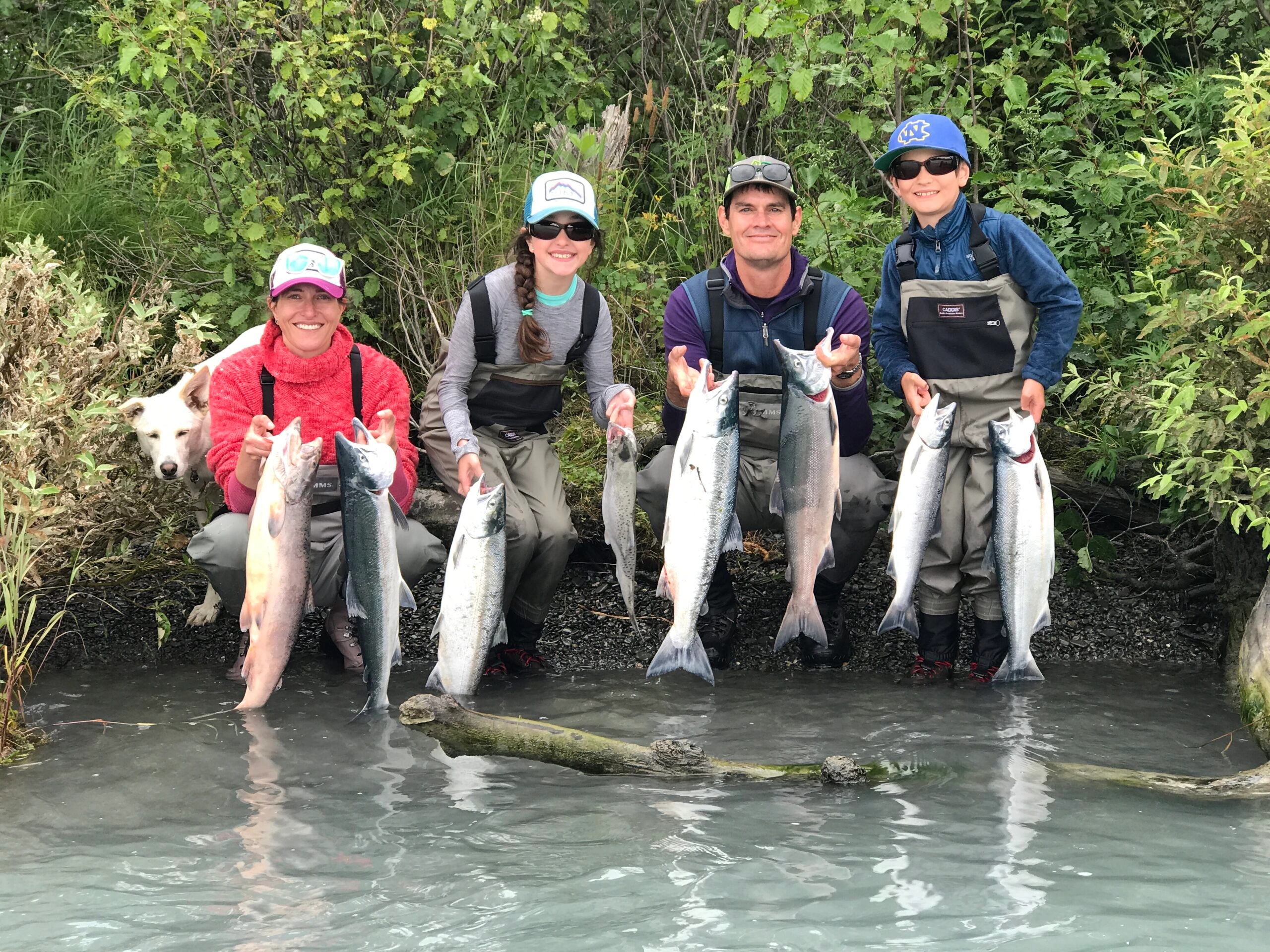
If you’re headed to Alaska’s Kenai River for June Sockeye Salmon fishing, you’re in for a fast-paced, action-packed experience.
Sockeye Salmon are known for their incredible strength, blazing speed, and delicious red fillets, making them one of the most sought-after species on the Kenai Peninsula. But Sockeye don’t strike lures the way other salmon do—they are plankton eaters in the ocean and largely stop feeding once they hit freshwater.
To catch them consistently, you need to understand the technique.
The Russian River Run (Early June)
In June, the first major push of Sockeye enters the Kenai River system. These fish are bound for the Russian River, a tributary of the Upper Kenai. This early run provides phenomenal bank fishing and walk-and-wade opportunities.
Because these fish are swimming upstream in tight formation along the banks, the primary method for catching them is a specialized technique often called "flossing" or the "Kenai Flip."
Mastering the "Kenai Flip"
The goal is not to trick the fish into eating your hook. The goal is to drift your line perfectly through their open mouths as they swim upstream, panting for oxygen.
The Gear:
- A medium-heavy action rod (8 to 9 feet).
- A baitcasting or heavy spinning reel spooled with 25-30lb monofilament.
- A leader (usually 3 to 4 feet of stiff fluorocarbon).
- A standard Russian River Coho fly (a sparsely tied bucktail fly, usually green, red, or orange) tied to a sharp, gap-style hook.
- Just enough weight (split shot or a rubber-core sinker) placed above the leader to keep your fly bouncing right along the gravel bottom.
The Technique:
- The Cast: You do not cast far. You flip your line just 10 to 15 feet out, slightly upstream (at about the 10 o'clock position).
- The Drift: As the current pulls your line downstream, you smoothly sweep your rod tip with the current, keeping the line taut. Your weight should be ticking the gravel bottom.
- The Strike: If the line stops, hesitates, or feels heavy—set the hook hard! Because you are drifting the line through their path, the leader slips into the fish's open mouth, and when you pull, the hook catches firmly in the corner of the jaw.
Water Reading is Everything
Sockeye travel the path of least resistance. They don't want to fight the heavy, deep current in the middle of the river. Instead, they hug the shoreline, utilizing the slower water near the banks and gravel bars.
If you are casting 40 feet into the middle of the river, you are casting directly over the fish. Our expert guides will position you on the exact seams and gravel bars where the fish are traveling, ensuring your bait is in the strike zone 100% of the time.
Ready to test your skills against the hardest fighting salmon pound-for-pound? Check our June availability and let's hit the river.