

Fighting a 50 lb Salmon
How to Fight a 50 lb Kenai King Salmon: The Technical Breakdown
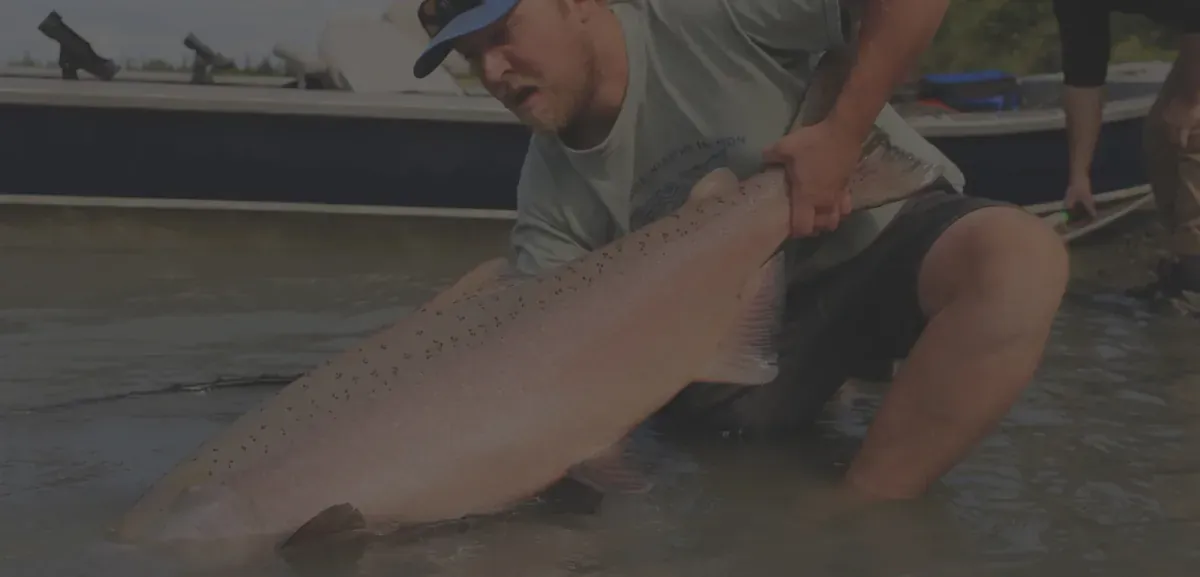
A 50 lb Chinook salmon on the Kenai River is not a theoretical exercise. Fish over 50 lbs are caught every season on the lower Kenai, particularly during the early King run in May and June. Most first-time clients who hook one lose it. Here's why — and how to not be that person.
The First 30 Seconds
This is where most big fish are lost. When a large King takes, the initial run is powerful and fast — 30–60 yards of line leaving the reel in seconds. The instinct is to tighten down. That's wrong. Your drag should be pre-set correctly before the fish hits — adjusting it in the chaos of the first run leads to over-tightening and broken leaders.
- Drag preset: Set drag at approximately 25–30% of your line's breaking strength before fishing. For 30 lb leader, drag should slip at about 7–9 lbs of pull. Test this before you're on the water.
- Rod angle: Keep the rod at 45–60 degrees during the initial run — never straight up (reduces shock absorption) and never flat (no control). The bend in the rod is your buffer.
- Do not try to stop the first run. Let the fish run. Your job is to maintain tension without breaking off. The fish will tire. You have time.
Body Position in the Drift Boat
- Stay seated. Standing in a drift boat while fighting a large fish is how people go overboard. Brace your feet, stay low, pivot at the waist to follow the fish.
- Face the fish. Keep your body oriented toward the fish — don't fight at an angle. Torque is your enemy when the line is already under maximum stress.
- Communicate with your guide. Your guide needs to position the boat to keep you at an advantageous angle. Call out "going left," "going right," "it's coming toward us" — constantly.
The Mid-Fight Phase
After the initial run, big Kings often do one of three things: hold deep, run again, or go aerial. Each requires a different response:
- Holding deep (the most common): Pump and reel — rod up slowly, reel down quickly. Steady rhythmic pressure. Don't horse it. Five minutes of consistent pump-and-reel is better than one minute of yanking.
- Second run: Same as first. Let it run. Maintain tension without breaking off. It will stop.
- Jumps: Drop the rod tip toward the fish (bow to the king) the instant it launches. A King's full weight coming down on a taut line snaps leaders. The bow reduces tension at the critical moment.
The Landing Phase
- Do not rush the landing. A fish that isn't fully tired will thrash in the net, break the mesh, and escape.
- Get the fish's head up and moving toward the net. When it rolls on its side, it's ready to net.
- Net head-first — scooping from behind is unreliable and often results in the fish thrashing out.
- Your guide handles the net. Your job is to control the fish's direction and keep its head up.