
Trophy King Salmon
How to Catch Trophy King Salmon: The Kenai River Technical Breakdown
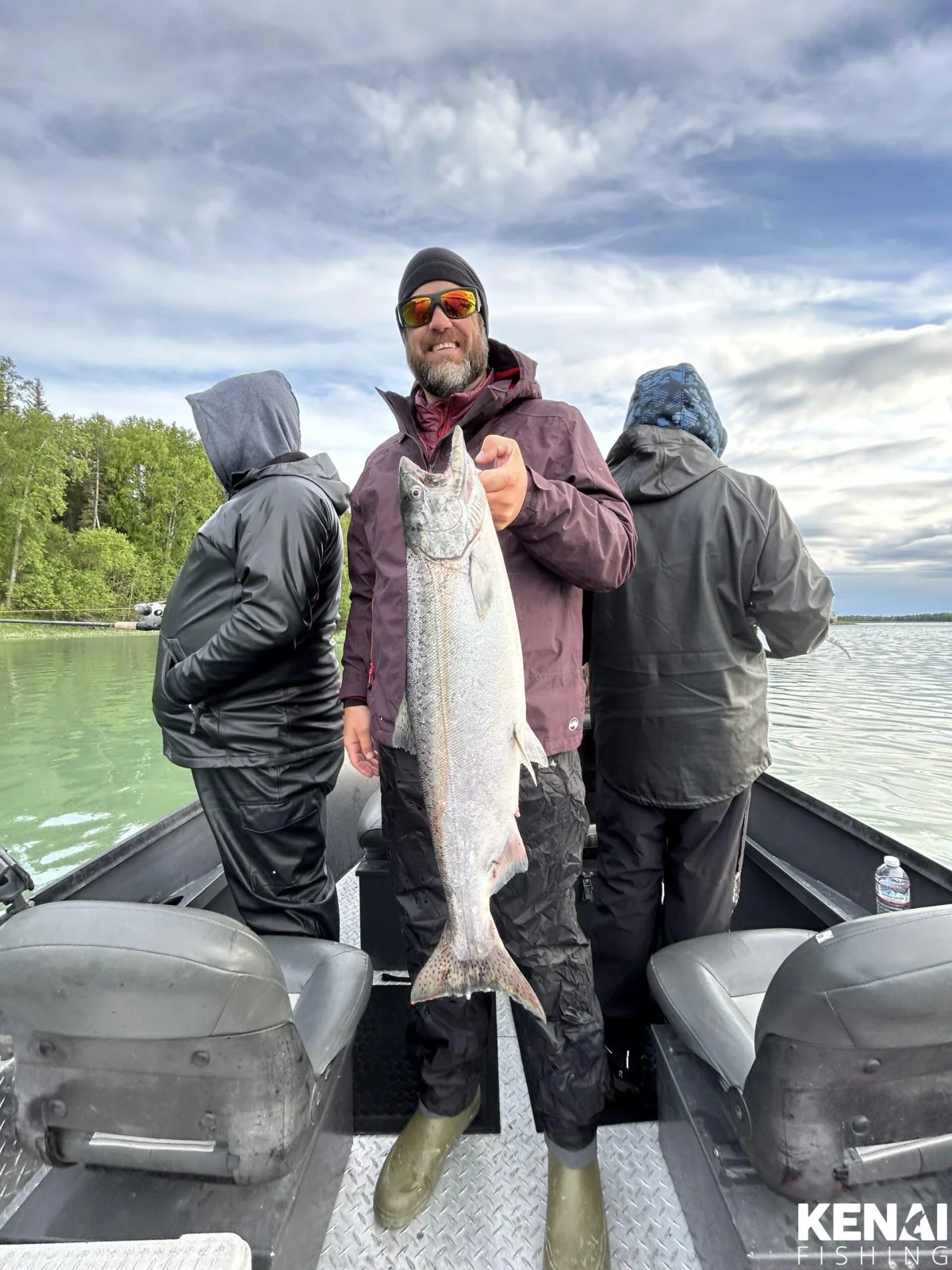
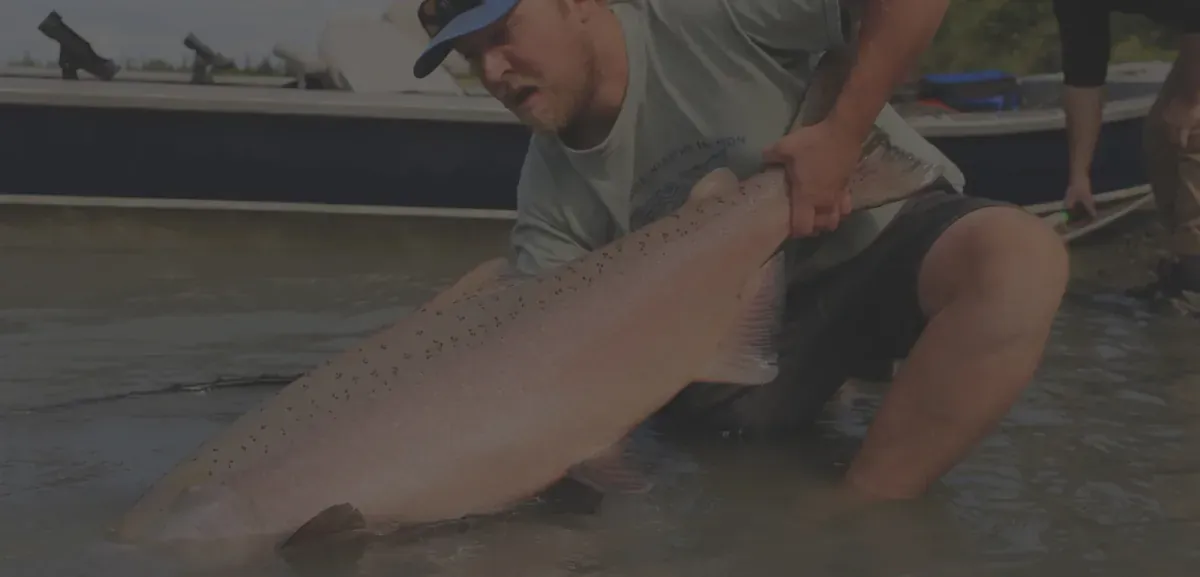
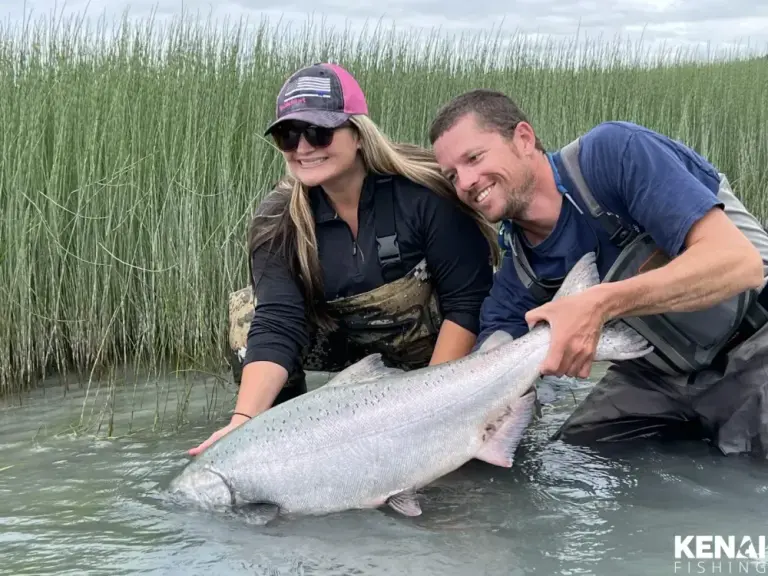
The Kenai River holds the IGFA all-tackle world record for Chinook salmon — 97 lbs 4 oz, caught in 1985 by Les Anderson near Soldotna. That record fish is why anglers come from 50 countries to fish this river. The genetics are still in the system. Trophy Kings — fish over 50 lbs — are caught every season.
Here is the tactical breakdown on how to target them.
Understand Why Kings Bite
Adult Chinook returning to spawn do not feed. They bite out of aggression, territory, and reflex — not hunger. This is the foundational principle behind every successful King technique. You are triggering a response, not offering food. Presentation precision matters more than bait selection.
Primary Techniques on the Kenai
- Back-trolling plugs: The most productive technique on the lower Kenai. Kwikfish (K16 or K15) or Brad's Super Bait wrapped tightly with sardine or herring. Trolled upstream at near-zero forward speed — the plug vibrates in place in the current directly in front of holding Kings. Depth: bottom ±1 foot. Speed: 0.5–1.5 mph upstream.
- Spin-N-Glo with eggs: Drift fishing with cured salmon eggs below a Spin-N-Glo attractor in chartreuse or orange. Best on upper Kenai and Cooper Landing section. Leader 18–24 inches below swivel, 1–3 oz pencil lead.
- Pulling plugs from anchor: Anchor directly upstream of a known holding hole. Lower Kwikfish to depth on a long line. Current works the plug. This is the guide technique for targeting specific fish on specific structure.
Depth and Location
- Kings hold in the deepest slots: 15–35 feet on the lower Kenai. Focus on the outside bends where current carves deep holes.
- Primary holding areas: Soldotna area (river miles 20–45), Funny River confluence, Beaver Creek stretch, and the Russian River confluence zone.
- Water clarity matters: Kings are more catchable in slightly turbid water (1–3 ft visibility). Crystal-clear water makes them spooky and less likely to strike.
Timing Windows
- Early run (May 15 – Jun 30): Lower fish counts but larger average size. Pre-dawn and early morning (5–9 AM) produce best. River is cold and clear — use natural colors.
- Late run (Jul 1–31): Higher numbers but subject to emergency closures. Check ADF&G orders daily at adfg.alaska.gov.
- Incoming tide influence: The Kenai is tidally influenced downstream of Soldotna. Fish move more actively on incoming tides. Check NOAA tide tables for Kenai.
Gear Specifications
- Rod: 8.5–10.5 ft medium-heavy back-trolling rod, moderate-fast action
- Reel: Level-wind baitcaster with line counter (Shimano Tekota or equivalent), 20–30 lb braid main line
- Leader: 30–40 lb fluorocarbon, 18–36 inches depending on technique
- Hook: 2/0–4/0 Gamakatsu octopus for eggs; factory trebles on plugs (sharpen them)
The Single Most Important Variable
Local knowledge. The guides who fish the lower Kenai every day in June know which holes are holding, what depth the fish are stacking, and whether yesterday's ADF&G sonar showed a pulse of fish moving through. That information isn't on any app. It's in the head of the person who was on the water at 6 AM. Book with KenaiFlyFish.com and fish with someone who has it.