
Knots for Heavy Braid
Best Knots for Heavy Braided Line: Kenai River Tested
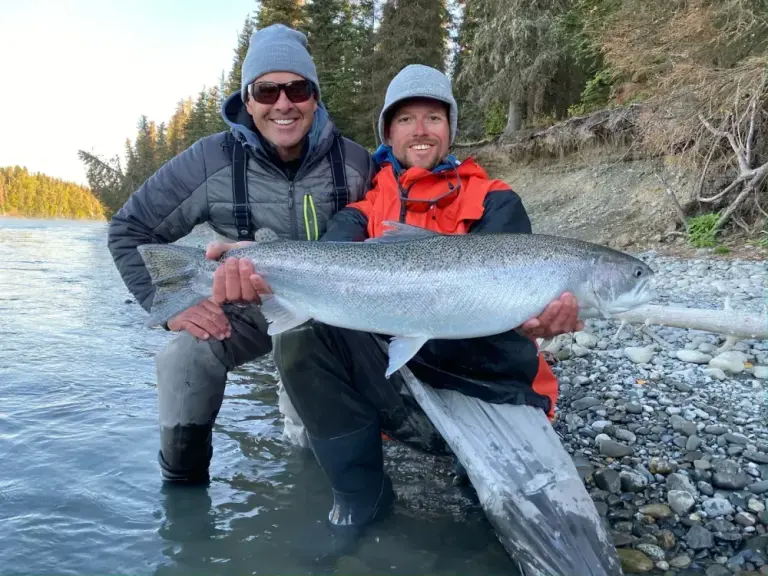
The Kenai River King salmon fishery runs 20–40 lb fluorocarbon leaders attached to 30–65 lb braided main line. The connection between these two lines is where most big fish are lost — not to hook pulls, not to drag failure, but to knot failure. Here are the knots that hold.
Braid-to-Leader: The Alberto Knot
The standard connection for braid-to-fluoro on the Kenai. Consistently tests at 90–95% of line rating when tied correctly.
- Form a loop in the fluoro leader, hold it between thumb and forefinger
- Pass the braid through the loop and wrap 7 times toward the tag end, then 7 times back toward the loop
- Pass the braid back through the loop from the same side it entered
- Wet the knot thoroughly before cinching — friction on dry braid generates heat that weakens fibers
- Trim tag ends close (1–2mm) — braid tag ends are slippery and can work back through wraps if left long
Braid-to-Leader: Double Uni Knot
Easier to tie in cold, wet conditions (which describes most Kenai mornings). Tests at 85–90% — slightly lower than Alberto but more consistent for anglers who tie it in the dark or with numb fingers.
- Overlap braid and fluoro ends by 6 inches
- Form a uni with braid: loop and wrap 6 times, pull tight
- Form a uni with fluoro: loop and wrap 4 times (fluoro is stiffer — fewer wraps, same grip), pull tight
- Slide the two knots together and seat firmly
- Trim both tag ends
Line-to-Hook: Palomar Knot
For tying hooks directly to fluoro leader. Strongest line-to-terminal connection available — tests at near 100% of line rating because the loop eliminates the weak single-strand stress point.
- Double 6 inches of leader through the hook eye
- Tie a simple overhand knot in the doubled line (do not tighten)
- Pass the hook through the loop
- Wet and cinch the knot down to the eye
- Works for hooks, swivels, and snaps — use it for everything at the terminal end
Leader-to-Swivel: Improved Clinch
Standard connection for attaching leader to barrel swivels (used in drift fishing rigs). Tie 6 full turns for fluoro — more turns than mono because fluoro's smooth surface needs more friction.
Field Testing Reality
On the lower Kenai, guides routinely test their clients' knots by applying firm hand pressure before the first cast. A knot that slips under hand pressure will fail on a 50 lb King. If you're not confident in your knots, your guide will retie them — ask them to. No shame in it. A lost fish because of a bad knot wastes everyone's time.